Depth of Code
Hani’s blog
Course: Learn How to Learn
I’ve recently gone through Coursera’s widely praised “Learn How to Learn” course. It was a short course with low time commitment that still contained a lot of useful information and tips.
Below are my notes from the course.
Week1:
- When you look at a task you don’t want to do, it activates your brain’s pain-associated areas (Insular cortex.) Your brain switches your attention to something else.
- However, if you start working on that task, the pain goes away.
- The Pomodoro technique is helpful for starting and focusing on a task.
- Math and Science are usually harder to learn due to their abstract nature. It is important to practice ideas to help strengthen the neuro-connections we make during the learning process.
- There are two modes of thinking: Focus mode, and diffuse mode. Like a coin’s sides, you can’t access both modes at the same time. You flip between them.
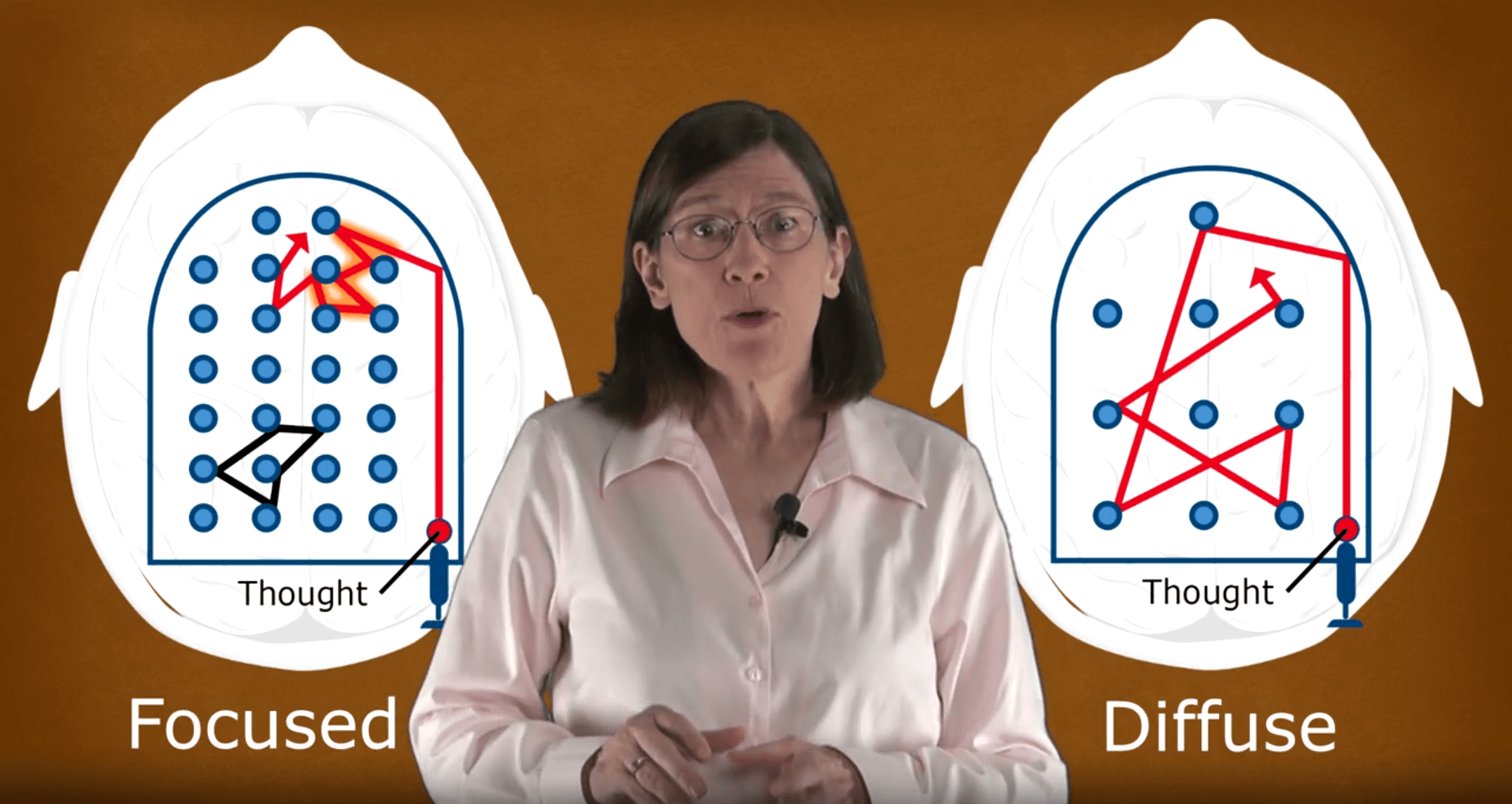
- Practice makes perfect: When you solve problems without looking at the solution, you deepen the neuro-patterns. Focus on a problem, then get some rest or focus on something else to fire the diffuse mode of your brain and help cementing the learned ideas.
- There are two types of memory: Long-term and short-term (working) memory.
- Working memory has limited space, and is used for newly encountered information.
- Use spaced-repetition to save information from your working memory into your long-term memory.
- Sleep is your brain’s way to stay clean & wash harmful toxins. Lack of sleep causes various health issues and negatively affects productivity and long-term memorization.
- Walking or running are good ways to disengage the brain, and switch to diffuse mode. Physical exercise increases the number of neurones in the brain.
- Writing tip: Editing while writing is akin to cleaning-up the table while still eating. Just focus on dumping the words on the paper/computer, then editing later.
Week2:
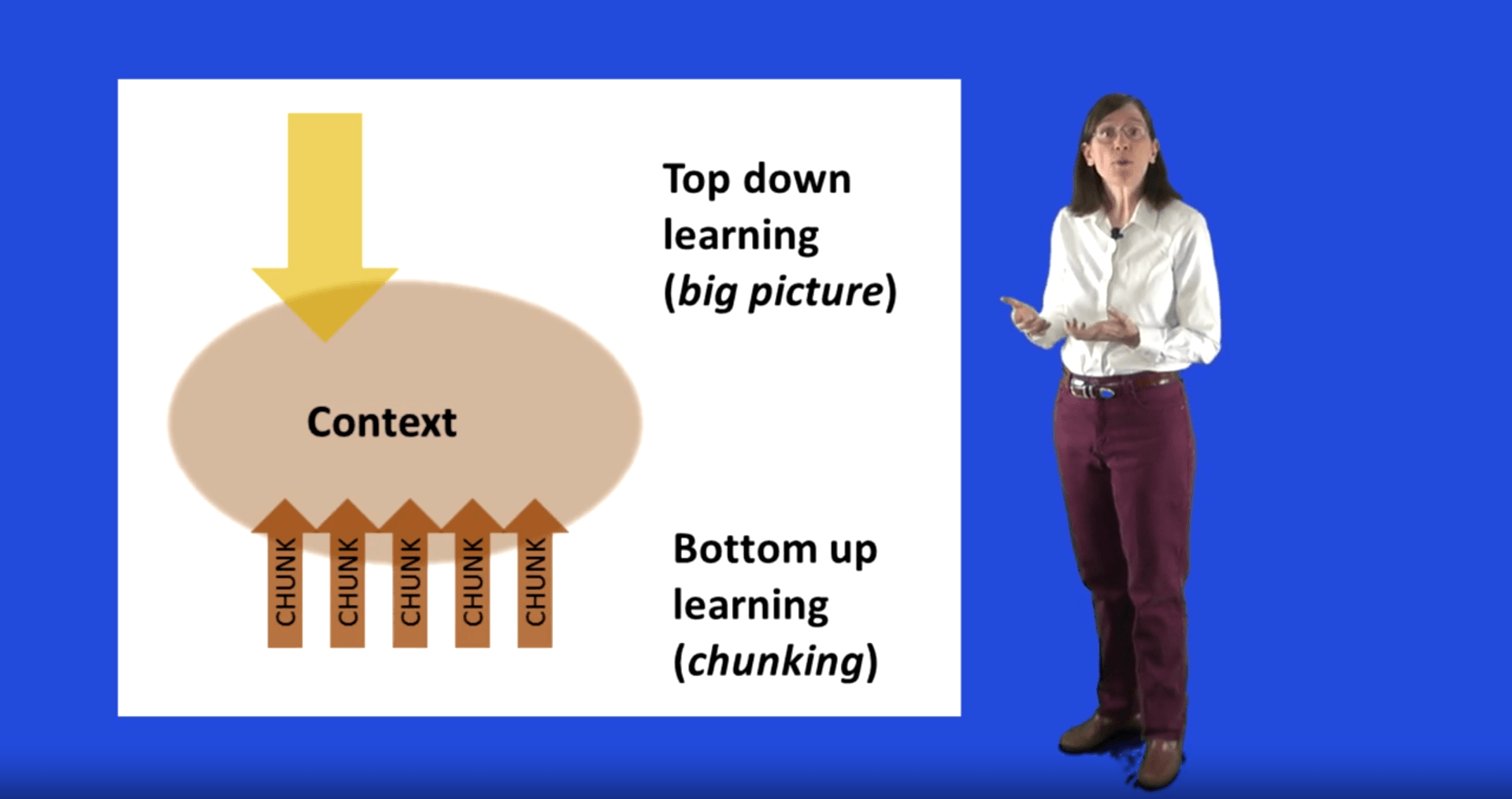
- Chunking helps uniting different pieces of information through meaning or use, to understand the bigger picture of a new concept or idea.
- Stress, Anger and fear make creating those connections harder.
- Best language learning programs combine structured focus-mode learning with lots of repetition to build chunks and diffuse-mode free-speech with natives to help connect the dots.
- At first, focus on the connections between different steps or chunks, rather than the why of these connections.
- How to chunk differs depending on the discipline, and whether it is mental or physical.
- A chunk is acquired through focused attention, understanding of the basic idea and practice to help gain mastery.
- You can form a chunk without understanding the general idea, but it would be less useful as you can’t connect to other chunks.
- An example of forming a basic idea is to quickly glance over a book’s chapter, noticing pictures and bold text.
- Seeing or reading a solution is not enough. You have to practice, test yourself and make mistakes to solidify the neural connection.
- Context is where top-bottom learning and bottom-up chunking meet. Both are necessary to gain expertise.
- Recalling (eg. Closing a book and trying to remember what you just read) is more effective than simply reading the material again and again, which procures an illusion of competence. Re-reading would be effective only when you let time pass between them (aka. Spaced repetition.)
- Synthesizing ideas from what you’re reading is better than highlighting and underlining parts that you deem important.
- Re-calling while being in different physical environment may improve information retention.
- Gradually build chunks of informations in your brain, that you can connect in new and innovative ways. The bigger the library, the easier it is to solve problems.
- Chunks from different fields can be related. This concept is known as transfer, which helps you solve problems from a field, using methods from another one.
- Two ways to solve problems: Sequential (involves focus mode) and holistic (involves diffuse mode). Later connects different focus mode ideas creatively and randomly.
- Overlearning can be valuable to create automatic execution, if you choke on tests or in public speaking for example.
- However, once you get the basic idea during a session, continuing to hammer at it is easy, doesn’t improve long-term memory and just provides illusion of competence.
- Focusing on the difficult material instead is called deliberate practice.
- Interleaving teaches better usage of the learned ideas by solving problems of different types which require a variety of techniques and concepts (eg. Jumping between exercises from different chapters of the same book.) It promotes creativity and flexibility.
Week3:
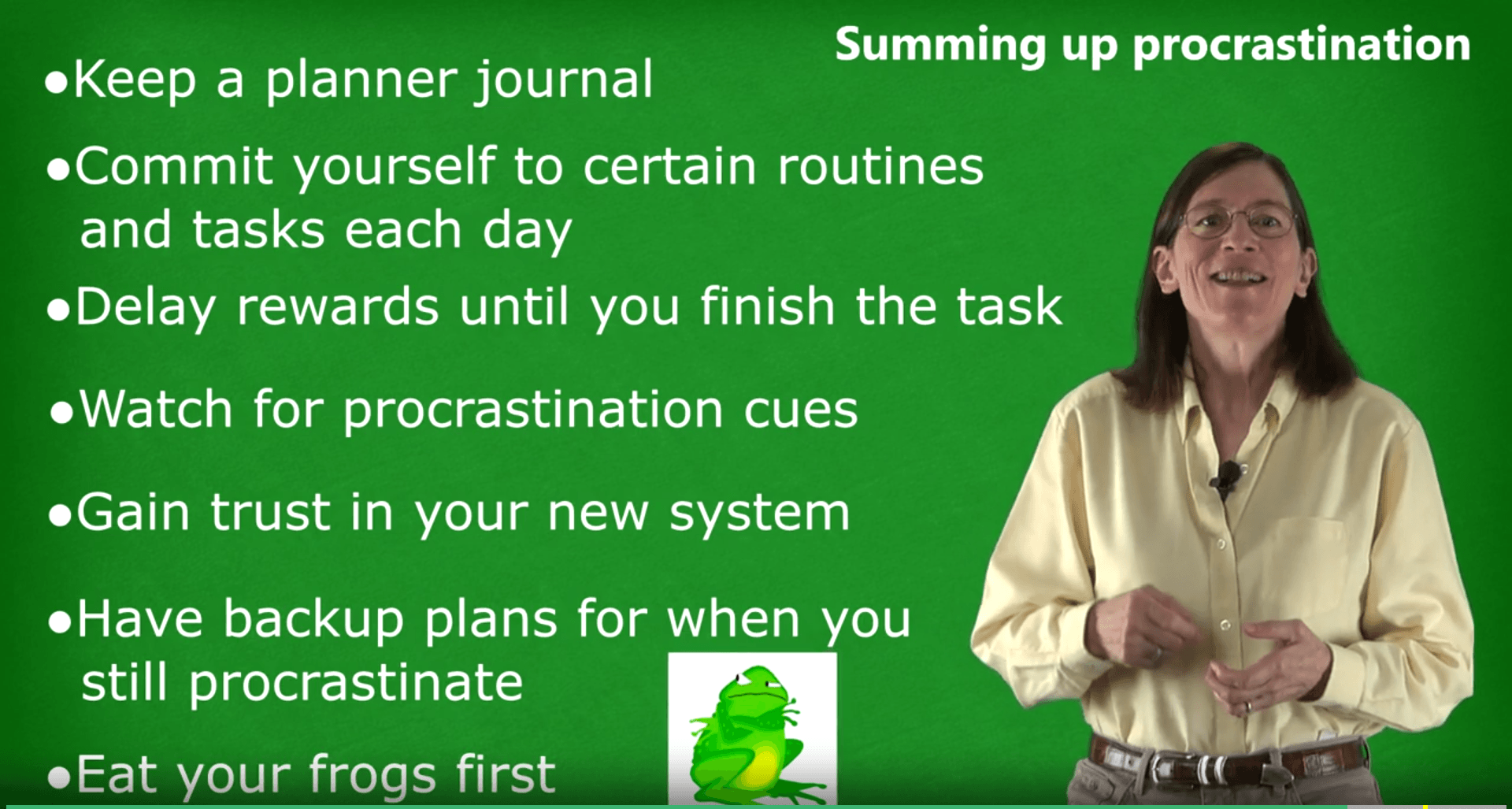
- It is important to tackle procrastination, because spacing learning gives better results than last-minute cramming.
- Willpower is expensive. Don’t waste it on frequently fighting procrastination.
- Habits have 4 parts: The cue, the routine, the reward and the belief.
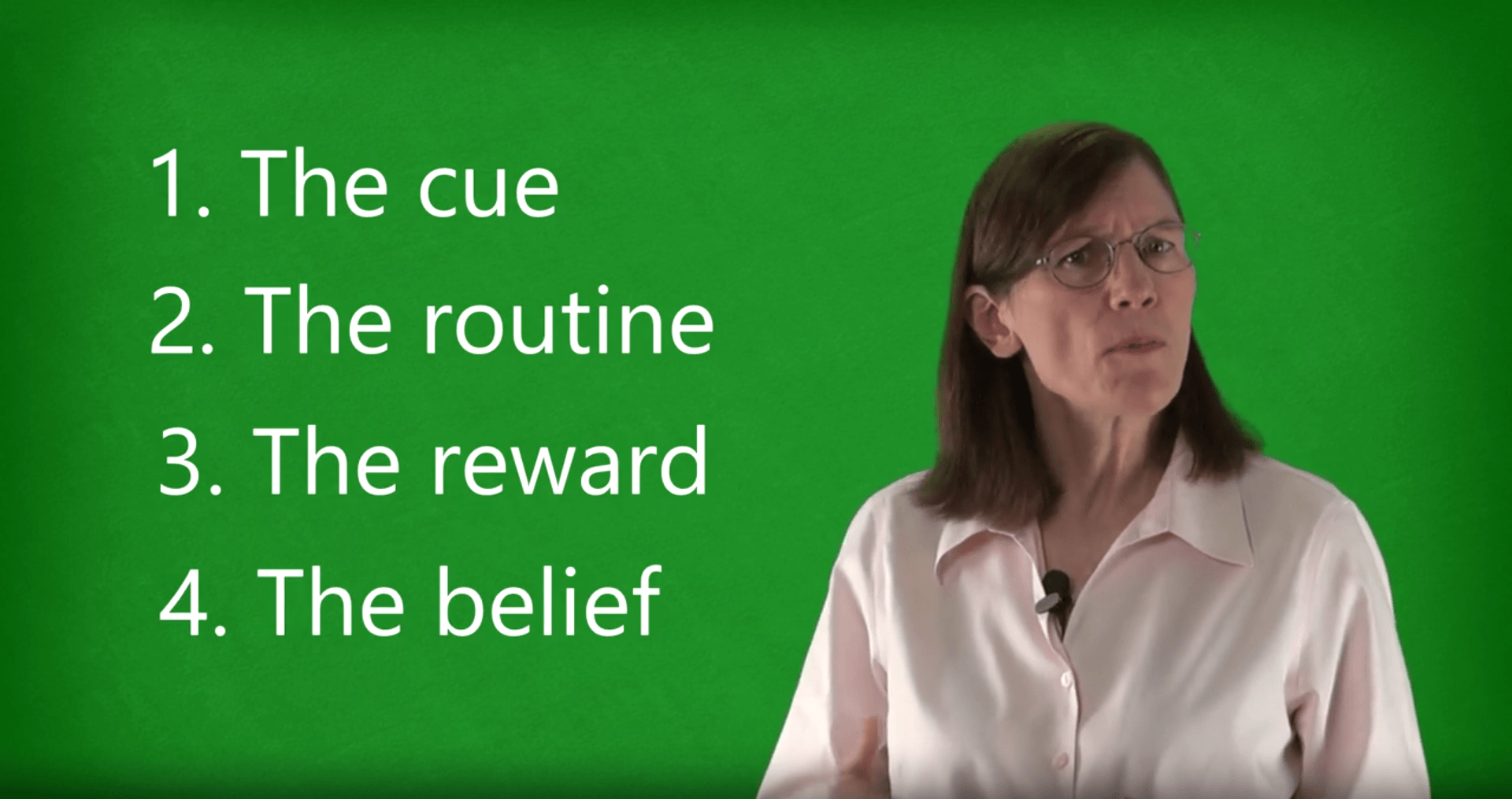
- To change a habit, you have to change the underlying belief.
- It is normal to feel some unease when you’re starting a task, but you have to continue the task nevertheless.
- Focus on the process (I’m going to study for 20 minutes) rather than the product (the homework I’m gonna finish.) which triggers the pain that causes procrastination.
- Processes built on habits allow you to focus on the flow of doing the task, rather than judging you (am I close to finishing ?)
- You can overwrite a bad habit by changing your reaction to the cue (location, time, feeling, reactions.)
- Have a plan to change the bad routine (eg. Leave your phone in the car.)
- Give yourself rewards for achieving tasks (eg. Shopping, walking, hiking…)
- Using deadlines (eg. Family lunch at noon, finish task by 5pm etc,.) can be useful.
- The better you get at something, the more enjoyable it is.
- Developing a community of like-minded friends helps consolidating a belief in the system.
- Use weekly and daily task lists to do. Do it the day before to help your subconscious stick to the task. It also frees your working memory.
- In your daily list, mix tasks that require focus with ones that don’t, allowing you to trigger your diffuse mode.
- Keep your items’ time reasonable. Note what works and what doesn’t, and have a goal finish time.
- Leisure time is important, and studies show that those who balance work and leisure end-up outperforming those who pursue an endless treadmill.
- You can tap into your visual memory system to remember hard concepts by associating them to images. Handwriting also helps memorizing concepts.
- Use flash cards systems like Anki to help visualizing concepts, and practice remembering them through spaced repetition.
- Due to reconsolidation of long-term memory, it is better to study something for 10 minutes each month, than for an hour once in a semester.
- Memory palace technique is useful to remember lists of things to remember.
Week4:
- When you’re not making progress in learning a new concept, metaphors and visualizations often do help getting unstuck.
- You learn something by trying to make sense of it. Constructing the patterns of meaning in your brain, instead of accepting ones told by someone else, helps better understand the concept at hand.
- While starting with easy problems works for some people, it might be better to start with a hard problem, then quickly switch to an easier one. As this would trigger the diffuse mode, while you’re focusing on the easier problem.
- Under stress, your body produces chemicals. Shift your thinking from “I’m afraid of this” to “I’m excited / looking forward to this” to help improve your performance.